Wednesday, March 09, 2011

Dark Road to Darjeeling (Deanna Raybourn)

One of my favorite fictional Victorian pairs is that of the mystery-solving duo of Lady Julia Grey and Nicholas Brisbane. I have loyally followed them from Silent in the Grave to their most recent adventure in a lush yet remote region in India via Dark Road to Darjeeling. While I thoroughly enjoyed the first two books of Ms Raybourn's Julia Grey novels, I was a bit disappointed with the third one and a taste of another (non-series) book wasn't too my liking. I suppose these had led me to approach Dark Road to Darjeeling with some trepidation.

Ms Raybourn soon put all my fears to rest. I think that she was back in top form while writing this mystery. Julia and Nicholas, accompanied by her siblings Portia and Plum, travel to Sikkim to help Portia's former lover Jane find the truth behind her husband Freddie Cavendish's untimely death. The isolated region in the eastern Himalayas where Jane now lives (called the Valley of Eden) straddles Sikkim and Nepal, and Julia soon finds out that it takes a certain sort of madness to live in such a place, especially when she digs deeper into the secrets of the individuals and families there. I felt that this particularly rich setting added to the mood, because the assembly of likely culprits wouldn't have seemed so mysterious had the story been situated in an English countryside.

This rather unique setting also encourages Julia to be a little bolder in her investigations. I've always liked how Julia Grey is (outwardly) a proper Victorian woman but because of her rather unorthodox upbringing is also quite adventurous and forward-thinking. In Dark Road to Darjeeling, Julia and Nicholas are entering a new phase of their relationship and their dynamic is somewhat different. But circumstances finally push Julia to reassess her role in the relationship, and I applaud how it was approached here.

Another thing that I've always enjoyed about Ms Raybourn's work is how she adeptly weaves some family drama or personal conflict into every mystery. What's worth nothing here is that as Ms Raybourn gives us a glimpse into the sickness and depravity of the human mind, she also manages to tug at our heartstrings by adding elements to help us understand the different family relationships of those involved. There are recurring characters here that may throw off new readers, but their background is adequately explained. The impact of their involvement in this story may be somewhat diminished for new readers but I hope that this does not dampen anyone's reading experience.

NOTE: This review is done in response to the Whodunit Reading Challenge hosted by Mary, Myra, and Fats at Gathering Books.

--
Reading this has made me quite interested in Sikkim (it's been a dream of mine for quite some time now to visit the country of Bhutan, and finding out how close it is to this Indian state has further intrigued me). It became a state of India in 1975 and to this day is recognized as one of the country's least populous states. Despite this, it is still home to a variety of races, cultures, and languages. To know more about Sikkim, visit their state's Information and PR Department.

Tuesday, March 08, 2011

Desperate Duchesses series (Eloisa James)

Stuck in Manila for a week more and with most of my friends at work, I turned to Eloisa James' Desperate Duchesses series loaned to me by my best friend. I finished this six-book series in three days (the first three on the first day) so I guess you could call me a 'desperate reader' at that time!

Set in the Georgian period, the series revolves around a group of young duchesses and their many romantic/marital woes. On the surface, there is not much here to distinguish it from the rest of the bodice-rippers in the market. The women are often adventurous beauties, the men are often cold rakehells, the consummation is always the stuff of legend. Although Ms James' books are stand-alones, they are still better enjoyed when read in the proper order. But tying them together, in a device I've rarely seen employed in a historical romance series, is a long drawn out chess match between the Duchess and Duke of Beaumont and the Duke of Villiers. Some of the characters' stories (especially that of the Beaumonts) are shared with us in bits and pieces before an entire book is dedicated to them (This Duchess of Mine).

It might be a stretch to imagine four, young, and extremely beautiful duchesses who happen to be friends and are unhappy with their current romantic lot (Ms James takes her cue from Desperate Housewives), but there is still much to enjoy in this series. It's a great guilty pleasure read, with its crop of intriguing characters, the genuine friendship between the duchesses, and the marital chess match. What I also admire about Ms James' heroines is that they actually do have other interests aside from fashion, gossip, and men: Jemma, Duchess of Beaumont, loves chess; Poppy, Duchess of Fletcher, is a budding naturalist; Henrietta, Duchess of Berrow, sits as a de facto judge at their local court. I find that these add a rather nice dimension to what would normally be a paper-thin character. These make me see these women as believably intelligent, instead of having to merely read them described as such. I certainly didn't feel that those afternoons curled up in bed and reading these wildly romantic romps were quite a waste.

The Desperate Duchesses series, in order:
Desperate Duchesses
An Affair Before Christmas
Duchess by Night
When the Duke Returns
This Duchess of Mine
A Duke of My Own

Sunday, March 06, 2011

Knowledge.

It does no harm to the romance of the sunset to know a little bit about it. -Carl Sagan, Pale Blue Dot

Came home from my first meeting as an official member of the Astronomical League of the Philippines. I'm humbled each time I realize just how little I know. Still, here I am, star stuff and luminous.

Saturday, March 05, 2011

The Replacement (Brenna Yovanoff)

I am generally distrustful of novels that put excerpts at the back of the book instead of actual summaries. It makes me think: a) someone's not doing his job; and b) really? you're going with that?

Not the case with Brenna Yovanoff's The Replacement. It was the excerpt that lured me in, guaranteed that I would think about it until I actually bought a copy and read until the last page. In case you're curious, it reads:

'In the story, Emma's four years old. She gets out of bed and pads across the floor in her footie pajamas. When she reaches her hand between the bars, the thing in the crib moves closer. It tries to bite her and she takes her hand out again but doesn't back away. They spend all night looking at each other in the dark. In the morning, the thing is still crouched on the lamb-and-duckling mattress pad, staring at her. It isn't her brother.
It's me.'

As you've probably gleaned from that, the protagonist Mackie Doyle isn't one of us. He lives in the town of Gentry, a self-sustained little town that somehow still clings to Old World folklore and traditions. Every seven years, a child is taken from the town and a changeling is left in his place. These replacements often doesn't live too long; Mackie is lucky that he's found a family who has loved and nurtured him all these years. Unfortunately, they can't protect him enough: his uncommon appearance and his susceptibility to blood, steel, iron, and holy ground continually mark him as an outsider and living in our world is slowly killing him. When his classmate Tate's younger sister is taken, events come to a head and he begins to confront the world beneath Gentry and his true heritage.

Reading The Replacement felt like reading Kelly Link-lite in a Guillermo del Toro/Tim Burton-esque world. Worth noting is that the mysteries surrounding Mackie and Gentry are presented and dealt with little fanfare. There is no breathless wonder accompanying each revelation. As most of the locals do, the reader is almost expected to accept the circumstances quickly and move on. I say this because a reader expecting otherwise might find The Replacement cold and detached in that sense.

I liked Mackie as a protagonist and was quickly drawn into his world. A lot of Old World beliefs are present in the text: scissors hung over cribs to prevent a child being stolen, the faerie aversion to iron, milk left out for the Good Neighbors. I liked how these elements were casually slipped into the text. Mackie's friends and family (particularly his sister Emma -- their relationship was one of the best things in this book) are an amazing support system, a positive force for a teenager who in all appearances looked and acted (with good reason) pretty emo. But there was something about the characters that made it difficult for me to truly empathize with them. Perhaps I just found his actions to be a little uneven: sometimes Mackie decided things quickly, other times he dithered. I understand that not everyone has to be brash and impulsive all the time, but I found that this reflected the pace of the entire novel. There were times when I thought that there was a lapse in action and plot movement while towards the end, I kind of wished that the climax had taken its time to sweep me along with it. To be fair, I liked the resolution and found it effectively dealt with the issues presented. I guess I had expected it to be a little grander, given the outcome.

YA readers who like their fantasies a little on the dark and macabre side might want to pick up a copy of The Replacement. It's a stand-alone novel with an intriguing premise that courageously wraps its story in a ccontained way. It might not be for everyone but Ms Yovanoff has found a new fan in me (plus she mentions Leonard Cohen, which is always a good thing). Do with it as you will.

Tuesday, March 01, 2011

The Scent of Rain and Lightning (Nancy Pickard)

Jody Linder's family is the wealthiest and most respected family in Rose, Kansas. So when three-year old Jody's young father is brutally murdered and her beautiful mother goes missing, the whole town reverberates with shock and anger. The Linders, led by the powerful Hugh Senior, make sure that the guilty is punished -- in this case, town drunk and wife-beater Bill Crosby. But twenty-three years later, Jody's world is rocked once again despite her efforts to carve out a new life under the watchful eye of her grandparents and doting uncles. Crosby is now back in Rose, and his son Collin, now a lawyer, is determined to prove his father's innocence. Jody must deal once again with the horrible crime that destroyed her family.

I found this mistakenly placed in the YA section (perhaps because of its cover) and was pleasantly surprised as page after page revealed something that I never expected. As a mystery, it is engaging as its details are drawn sharply and compellingly. As a family drama, it doesn't quite have the intensity of Alice Sebold's The Lovely Bones but it is still effective in painting the different relationships in the Linder and Crosby families. There are lovely contrasts emphasized between the lives of Jody and Collin before and after the event, and while their growing relationship isn't as essential to the plot as other elements are, I still found myself hoping that Ms Pickard chose to explore this a bit more.

It took me a while to get used to the pace. It starts in present-day Rose, when Jody's uncles tell her that Crosby has returned. The next half of the book recounts the events that lead up to Hugh-Jay Linder's death before jumping back to the present. Doing so heightened the tension and the mystery, and by the truth was revealed, I had learned to appreciate why Ms Pickard told the story that way. I certainly didn't call this one at all.

The Scent of Rain and Lightning is a glimpse into small-town life and politics, into a family and a town dealing with fear, mistrust, and outrage. There were a lot of elements here that are present and plausible in the Philippines' own rural areas. Despite being different from my usual reading fare, The Scent of Rain and Lightning was a quick read whose grit and spirit did not disappoint me in the end.

NOTE: This review is done in response to the Whodunit Reading Challenge hosted by Mary, Myra, and Fats at Gathering Books.

Wednesday, February 23, 2011

The Laughter of Dead Kings (Elizabeth Peters)

With all the negative connotations that come with being stereotypically tall, buxom, blue-eyed and blonde, it's a wonder that Elizabeth Peters can still turn her Dr. Vicky Bliss into a charming character. I guess it's the reason why I've been patiently following her Vicky Bliss series for years now. Vicky is smart and self-deprecating (her biggest gripe is that no one takes her seriously, looking like she does), practical yet given to fits of emotion, and generally the kind of person I'd want with me on an adventure. She's an American working for the National Museum in Munich and her specialization in medieval art often finds her poking her nose into some art forgery investigation or a smuggling ring. The series began in the seventies, with Borrower of the Night and the most recent title, The Laughter of Dead Kings, was published more than twenty years after.

Dead Kings rounds up familiar faces: Vicky's lover, the now-reformed art thief John Smythe/Tregarth, and her boss Anton Schmidt. This time, the mummy of King Tut has been stolen and being held for ransom, and John is everyone's prime suspect. When the couple's friend Faisal asks for help in finding the missing mummy, Vicky and John can't resist, especially since they get to clear John's name while doing it. For the first time since reading the series, I became very aware of the time period. Most of the Vicky Bliss books have been set (at least in my mind) during some generic, almost indistinguishable, time frame. This really helped me to view the work as timeless instead of dated. In Vicky's latest adventure though, modern technology has come into play. It's not exactly unwelcome especially since it would have been difficult for the characters to communicate in a contemporary setting without a mobile phone, but it did make me realize that Vicky Bliss is changing with the times.

The mystery in The Laughter of Dead Kings was a bit predictable, but I don't know if it was because I've been so accustomed to Ms Peters' writing that it was easy for me to put two and two together. There was a dearth of suspects for me so there were no surprises for me at the end. But despite that, I still greatly enjoyed reading about Vicky and her friends. They're part of my literary family, characters I've grown so used to and have loved and admired all these years. The Laughter of Dead Kings may not be for readers who are unfamiliar with Vicky Bliss, but longtime fans will find that there is still a lot to be enjoyed in this installment.

Monday, February 21, 2011

Grace Under Pressure (Julie Hyzy)

Part of me wanted to start on Julie Hyzy's White House Chef mystery series, especially since one of the titles, State of the Onion, won the Anthony Award for mysteries in 2009. But somehow the charming description of Grace Under Pressure won out, maybe because I felt I was getting enough of my spy-and-state-secrets stuff with TV shows Chuck and Covert Affairs. So goodbye, White House; hello, Manor of Murder.

Was it everything I expected? Well, yes and no. It wasn't the quaint and charming small-town whodunit I had in mind but one thing I enjoyed about it immensely was its pacing. It might be strange to describe a mystery as leisurely, but that's what I felt from reading this book. Things happen, don't get me wrong, but it is Grace's patient sleuthing that wins the day. As the (former) assistant curator of the Marshfield Manor, Grace is tasked with keeping the museum/inn property running after head curator Abe is murdered in a case of mistaken identity. When she realizes that the local PD isn't quite up to the task of solving such a case, Grace's best recourse is to do as much as she can to help put things back on track. Clues don't just drop into her lap; she has to go through files and folders and work on her day job in between! I thought that this was a welcome break from the action-packed mystery route. I also enjoyed how there was more to discover aside from the main whodunit, and I have to admit that I was more hooked on Grace's family mystery. While this particular plot line isn't exactly rocket science, it still paves the way for future conflicts that might arise in the succeeding titles.

Ms Hyzy doesn't give up all of Grace's stories in just one book. She certainly knows how to whet a reader's appetite: introduced is a hint of a romance (blink-and-you'll-miss-it) between Grace and landscape architect Jack, as well as some unresolved issues between Grace and her sister Liza. I just wish Ms Hyzy had remembered to include Terrence (the manor's head of security) during the last bits; for someone who was very important in the beginning, he all but disappeared towards the end. I do hope to read more about him, as well as the other characters in Grace's life. Yes, even the infuriating ones.

NOTE: This review is done in response to the Whodunit Reading Challenge hosted by Mary, Myra, and Fats at Gathering Books.

The Satellite.

My first astrophoto. Not exactly the best shot since it's too bright but I can't help but feel so pleased that I had the opportunity to learn from a talented, patient, and generous group of astronomers.


Dance me to the end of love, Leonard Cohen sings for me tonight. We're still finding out how.

Wednesday, February 09, 2011

World Without End (Ken Follet)

To say that I found Ken Follet's World Without End rather disappointing would be an understatement. As someone who was really hooked on his Pillars of the Earth, chronicling the lives and the legacy of medieval lovers Jack and Aliena, I was really looking forward to reading World Without End because it was about their descendants and set in a similar tone, a familiar world.

Too similar and too familiar, I soon found out.

World starts as four young children witness a knight with a secret kill the men who are running after him. The children are from different worlds, unaware how the events of that day would have far-reaching effects that would shape who they would become. On paper, it sounds different from Pillars but somehow, this still echoes the previous work in characterization and plot so much that it feels like a mere rehash, and even then, falls short of its predecessor.

The characters seemed shopworn to me. They have no moral ambiguity that would have helped create tension or generate more sympathy: good characters are 'good,' bad characters are inexplicable driven by narrow-minded malice and evil. Merthin is the talented descendant of Jack Builder, so anything he touches turns to gold. He even survives the Black Plague in Italy, where he has established his fortune after years of struggling as an unrecognized builder in Kingsbridge. Stepping into Aliena's shoes is Caris, the intelligent daughter of a wealthy merchant and the love of Merthin's life. Like Merthin, Caris is written as if she has a halo around her head. Of course you know she is going to triumph against all adversity. There is no thrill here that suggests otherwise. Against these two would parade all sorts of envious, greedy characters, all cut from the same cloth, none coming remotely close to any sense or reason.

The only characters whom I thought might still surprise me were Gwenda, a thief's daughter and Caris' friend, and Thomas, the mysterious knight, but instead they are given such paper-thin existences. Gwenda, shrewd and capable but still of largely uninformed peasant stock, does an inexplicable job of sounding like a lawyer in one of the confrontations in this book. Sir Thomas is all but forgotten towards the end. There were so many times that I wanted to put this book down but I felt the need to finish it because I felt as if I owed it to the Mr Follet who wrote Pillars of the Earth.

I could go on and on about the things that I did not appreciate in this voluminous story (I haven't even started on the logical lapses in the plot) but I know I have to stop at some point. I still think Mr Follet is talented enough in bringing out the rich, even minute, details of medieval life and anyone interested in that might be persuaded to give this a try. I urge you to check out reviews from other readers, because I think this averages four stars on Amazon and GoodReads. But in the end, World Without End is not for everyone, and it was certainly not for me.

Monday, February 07, 2011

The Case of the Missing Servant (Tarquin Hall)

Murder and humor meet in this exotic gem of a mystery. Tarquin Hall's The Case of the Missing Servant takes place in the heart of India and serves up a sharp and entertaining whodunit through its array of colorful, memorable characters.

Vish Puri is a middle-aged private eye with a quick mind and an enterprising team (one that includes eyes and ears with nicknames like Facecream and Tubelight, plus a woman who answers nine undercover phone lines with a variety of voices). He prides himself on being a disciple of statesman Chanakaya and continues the ancient tradition of espionage and investigation that his guru has established. His bread and butter lies in investigating marriages, from doing background checks for couples who opt to marry for love instead of doing it the old-fashioned, arranged way to shadowing spouses accused of adultery. Since he trumpets that 'confidentiality is our watchword,' he also finds himself in some high-profile cases.

Such is his latest one: a female servant has disappeared from the employ of controversial lawyer Ajay Kasliwal under mysterious circumstances. The lawyer pleads his innocence and instructs Puri to help him. But with the servant's first name being his only lead, Puri must use all his resources to uncover the truth. It sounds almost impossible to solve at first but I admire how Mr Hall created a character who is smart enough to recognize opportunities and make India's red tape and complex systems work for the benefit of truth -- all in a light and very believable manner.

According to his biography, Mr Hall has worked and lived in India for quite some time and his familiarity with its way of life, language, and quirks definitely show in this novel. He has a very descriptive eye that he uses to establish the setting: 'Beneath faded, dusty awnings, cobblers crouched, sewing sequins and gold thread onto leather slippers with curled-up toes. Spice merchants sat surrounded by heaps of lal mirch, haldi and ground jeera, their colors as clean and sharp as new watercolor paints (p54-55).' As someone who is not at all that familiar with the Indian culture, I enjoy how passages like this create what Anne Shirley would call 'scope for the imagination.' Even though there is a part of me that wonders if Western authors writing about Eastern subjects tend to romanticize things, in the end, I think whatever traces of Orientalism there may be in the text still made the story come alive. I thought it made the setting such a delicious addition to the whole reading experience.

I enjoyed that there are three different plots going on at once. Aside from the main mystery, Vish Puri also has to a) dodge bullets from a mysterious party who wants him dead; and b) investigate the prospective groom of the granddaughter of a respected and decorated war veteran. What I liked most is how these sub-plots could hold their own against the main story without taking the focus away from it. I thought Mystery A was handled with panache (thanks to the presence of Puri's fascinating Mum) and was resolved so that it could still be revisited in latter adventures. On the other hand, there was Mystery B which involved a nice heartwarming twist that I admired. To some degree, I had guessed the outcome of the main mystery but there was still an element there that I didn't anticipate, which made the whole puzzle satisfying for me.

Mr Hall has created memorable characters that feel very authentic and I am intrigued to follow each one of them. The Case of the Missing Servant is a very enjoyable start to a promising series. It certainly made me want to read more of Vish Puri's India!

NOTE: This review is done in response to the Whodunit Reading Challenge hosted by Mary, Myra, and Fats at Gathering Books.

Thursday, February 03, 2011

Want Books? (The Duff)

Want Books? is a weekly meme hosted at Chachic’s Book Nook and features released books that you want but you can’t have for some reason. It can be because it’s not available in your country, in your library or you don’t have the money for it right now.
Reading the premise of Kody Keplinger's The Duff was enough to make it skyrocket to my Want Books? List. Duff stands for Designated Ugly Fat Friend, a persona I've definitely come to identify with over the years. I'm actually pretty okay with who I am and how I look, so I can honestly accept that I am not the most attractive-looking one among my friends. In this YA novel, Bianca is witty and outspoken, and she also happens to be the least attractive one in her group of best friends. What's nice is that their circle of friends appears to be loyal and genuinely caring towards each other. But not everyone has a good opinion of Bianca, especially Wesley, who insults her but with whom she starts to develop an intriguing love/hate relationship. I'm not doing a good job of summarizing this, I know. I could just be pretty excited to read it.

In other news, I truly enjoy doing Want Books? posts. I don't add to the list regularly, but I've already acquired the two books that I've previously listed (although one of them will still be shipped at a later date). I guess having a list like this is a good motivator for me to pick up titles that I'm interested in, instead of abandoning them by the wayside once a different title catches my eye.

Saturday, January 29, 2011

Minotaur (Benjamin Tammuz)

'He remembered what Chekov said about loaded revolvers: "If a revolver appears in the first act of a play it must be fired in the third act." [...] A revolver can appear in the first act and be fired pointlessly, and despite this it will be a play worth performing...(p180)'

So goes a passage from Benjamin Tammuz' 1981 English Book of the Year winner Minotaur. This powerful story revolves around an Israeli secret agent and his all-consuming love for a much younger woman. This is not Lolita; the two never meet except through letters and records exchanged over the years. Thea, the young woman, is about seventeen when forty-one year old Alex Abramov first sees her on a bus, yet something in her carriage and demeanor captivates the older, hardened man. He watches her from a distance, and in time engages her in an intriguing epistolary relationship. Thea is drawn to her mysterious suitor as well, accepting the strangeness of his existence while attempting to create a life of normalcy.

Aside from Alex and Thea, Minotaur also chronicles the lives of two of Thea's lovers: G.R., the man she almost married, and Nikos, her most recent lover. By shifting the perspective to these men, Mr Tammuz eloquently pieces together key moments in Alex and Thea's shared history. The result is not just a plot that oscillates with richness and passion despite its deceptive simplicity, but detailed studies in character as well. Minotaur urges you to come full circle: it starts with Alex, the secret agent, before moving to G.R., Nikos, and finally, Alex, the man. Alex's devotion to Thea is moving; throughout the novel, I came to view him with equal parts of ire and pity.

Minotaur struck a chord in me because I responded to the masterful way that Mr Tammuz drew me into these characters' lives. There was something almost voyeuristic in it, as if the reader has taken over Alex's role as a spy. I found the images brimming with emotion (my copy was translated from Hebrew by Kim Parfitt and Mildred Budny). It stirred within me questions regarding morality and devotion and forgiveness until its beautiful, bitter denouement. 'God gave signs, long ago,' Mr Tammuz writes, 'only to his prophets, not to simple girls, even if they were as simple as goddesses, according to their lovers (p96).' The novel is a prophet then, and the signs of the resolution of Alex and Thea's lives are laid bare on the page. It is a love story that I know will always resonate with me.

Friday, January 28, 2011

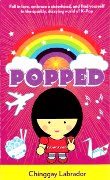
Popped (Chinggay Labrador)

In another life, I am obsessed with anime and manga, Japanese pop stars and movies. I took Japanese language classes. I've stayed at home just to finish an entire series. I wrote fanfiction; I've even made a Japanese-inspired harem game and a manga. One of my lifelong goals is to visit Japan, land of everything for which my fangirl heart beats. (Does that totally destroy any kind of lit street cred I may have? LOL.)

So when I came across Chinggay Labrador's Popped, I knew right away that I was going to relate to the story. The protagonist, Andie, is getting over a breakup via Korean dramas, which is only the start of her obsession as a K-fangirl. She and her friends find themselves elbowing other fans at a local K-pop concert, taking trips to Japan and Korea, and even chasing stars all over the place. Popped is really more about female solidarity, guilty pleasures, and unabashed optimism more than it is a love story, but there is still kilig there. Perhaps that kilig factor is already inherent in every fan-chasing-star tale (and how close they come) but Popped is still seasoned with a couple other romances that can touch anyone whose ever liked Asian-style love stories. I say this with a caveat though: I don't know how a non-fangirl would react to the story. Sure, there are a couple of things that seem far-fetched but I think that their adventures are the kind that a fan would dream of having. Also, the gushing tone that the characters use might get on some nerves if you're not familiar with the whole scenario. Andie certainly became hardcore too fast too soon, and though it's not unheard of, the lengths she goes to in her Second Life can take the reader aback.

I've never been to Korea but Ms Labrador writes her setting with such familiarity and enthusiasm that I feel as if I'm right there having this adventure with her. I've actually done something similar: a) one of my reasons for going to Taiwan was to see that diner where Shan Cai and Dao Min Si would meet but practicality won out in the end; and b) my sister and I have done that whole star-chasing thing when Jerry Yan and Vic Zhou came to Manila. But in Popped, this kind of adventure is given larger significance because it becomes not just about chasing boys, but about being there for your friends. Having BFFs who can understand you and appreciate you for all your quirks and moments of weaknesses is something worth treasuring, even if you have to go to another country to reaffirm that. Because of this, Popped is something I would heartily recommend to my chick-lit loving fangirl friends -- let's do this. >.< ^_^

Tuesday, January 25, 2011

Smaller and Smaller Circles (FH Batacan)

With its command of logic, suspense, and contemporary Filipino elements, FH Batacan's Smaller and Smaller Circles is definitely worth the accolades and awards heaped upon it. This winner of the 1999 Palanca Grand Prize and 2002 National Book Award is a well-crafted Pinoy version of CSI, with two Jesuit priests investigating the grisly deaths of adolescent boys in Payatas. Their investigation convinces them that this is the work of a serial killer, one given to removing the hearts and genitals of his young victims and peeling their faces off. Lacking a team and proper resources, the priests (Fr. Gus Saenz is a forensic anthropologist while Fr. Jerome Lucero is a clinical psychologist) must rely on their instincts and their intelligence--as in real life, it's challenging to work with local law enforcement--to catch this troubled murderer.

I thoroughly enjoyed Ms Batacan's carefully-plotted narrative. Carefully interspersed between the chapters are the killer's thoughts, the increasing panic and mania of the hidden self. Foreshadowing is done with subtlety but an avid mystery reader's Spidey senses would be set off by a fair number of them. What works even more for me is how Ms Batacan included the point-of-view of the different people around the Jesuits, from the NBI's investigative team head to the gutsy crime reporter who knows how to go after a story to the stricken victim's families. By not shying away from revealing the injustices committed by an imperfect system, she manages to depict tragedy with an almost journalistic stance, but one that is not devoid of the Filipino's penchant for emotion.

The blurb at the back of the book lauds it for being both 'popular' and 'literary', and I couldn't agree more. Smaller and Smaller Circles is an evocative and sharply-written novel that paves the way for similar intelligent crime stories from Filipinos.

--
NOTE: This review is done in response to the Whodunit Reading Challenge hosted by Mary, Myra, and Fats at Gathering Books. I'm hoping to reach the Mythic Crime Buster Level (6-8 books); one mystery novel per month (it runs from January to June) definitely sounds like a comfortable pace for me.

Monday, January 24, 2011

No Strings Attached (Mina V. Esguerra)

Aspirational is a term that we loved to use when I was still in advertising (and by 'loved', I mean a mixture of sarcasm, amusement, and fondness). I don't even know if it's a legit word. "We want it to be aspirational," we were always told, whether we were making brochures for mid-rise condominiums or sale ads for a popular mall. Our team knew aspirational more than we knew the back of our hands, because let's face it, we were never asked to spend hours staring at the back of our hands.

But I've always believed that one place where that term belonged was in romance. Being aspirational is inherent in almost every love story. It's the anak-mayaman who falls in love with the household help; it's the romantic groveling scene that's tacked on at the end of every Hollywood rom-com. It's the reason I read chick lit -- the strange suspension of disbelief that yes, a finance lawyer can also be a domesticated goddess, that yes, a size-14 has-been pop star can find love with a hot private eye. Without that aspirational hoopla, we'd be reading a totally different genre. For me, a good romance would be the one that makes me feel happy with the life I'm living, but tells me that I can still indulge in the life I could almost have.

That's what I felt with Mina Esguerra's No Strings Attached. It's the third of her books that I've read and no matter how much I've gushed over the other ones, this has become my favorite. In this story, twenty-nine year old Carla deals with being the youngest and only unmarried single female in her barkada. But just before she turns 30, she meets impulsive, independent Dante -- boss' son, college prof, cool older brother, and five years younger than her. (I think that if my friends are reading this entry, they'd be laughing right now.)

What makes the story work is that despite what I would call the 'aspirational' stuff (by her own admission, Carla has become 'exponentially more attractive (p9),' having 'learned the importance of correct clothing sizes and flattering haircuts (p9)'), it still feels very grounded to me. I thought Carla's reaction to Dante is very real. She doesn't want to rock the boat when this new guy comes into her life. She has her hesitations but she weighs her options and decides to just go with the flow. I like how elements like this make a chick lit heroine much more accessible to the reader. What's more, Ms Esguerra easily shows us how a guy like Dante can be compelling enough to sweep Carla off her feet. Dante is so unlike the typical guy I would fawn over in a romance novel, but he is given such maturity and charisma that I found myself squeeing over the simple things: the way he made sure Carla would see him again, the way he texted her, the way he was when they were with his friends. His and Carla's relationship is drama-lite (not exactly the drama-free one they wanted) and that just makes it all the more believable to me.

In the end, No Strings Attached is not just about getting the guy. It's about making a relationship work so that he stays gotten. There's a studied air in the way this whirlwind romance is written: a great balance between what a woman could aspire for and what she knows she can keep.

Friday, January 21, 2011

Unseen Academicals (Terry Pratchett)

Of all of Sir Terry Pratchett's Discworld 'sub-worlds' (Death, witches, The Watch, and the wizards), it is the wizards' world to which I least gravitate. Strange as it may sound, I find it easier to relate to a group of city policemen or stories about a hooded figure in black who speaks in ALL CAPS. I thought that I would approach Unseen Academicals with an obligatory air, to just read it because it was part of the series. Perhaps I did, in the beginning, but towards the end, I realized that there was finally a wizard-centric Discworld novel that I truly liked.

Unseen Academicals is a story about football--the Patrician has pressured the Unseen University into organizing the unruly local game foot the ball--but like most of Sir Pratchett's works, there's more here than meets the eye. It is a story of acceptance, destiny, forbidden love, and yes, even fashion. There's even the inclusion of one of my fave Discworld characters, the editor-in-chief of The Times so there's a healthy bit of journalism in there as well.

Integral to the story are four young people--or three young people and a grey creature. There's Trevor Likely, son of a local football legend, who has vowed never to play after his father's death; Juliet, object of Trev's affections and mysterious 'it' girl of dwarven fashion; Glenda, Juliet's friend and protector who runs the Night Kitchen at the University and is known to give everyone a piece of her mind (as well as a slice of pie); and finally the enigmatic Nutt from Uberwald, who works in the University's candle vats but has a brilliant mind -- the kind that can do mental sums and whip a fledgling football team into championship shape.

Some people not used to Sir Pratchett's style may find Unseen Academicals hard to get into because of the different plots in the beginning, but everything does come together in a grand Ankh-Morpork sports drama. What sold me on the series was Glenda (finally a Discworld character to whom I could really relate). Sir Pratchett writes, 'Glenda [...] never found anything good in her size and indeed seldom found anything in her size. In theory, something should fit, but all she ever found was facts, which are so unbecoming (p149).' She likes making everyone's business her own, she doesn't hesitate to make her opinions known, and she is loyal to a fault. Easy to see why I like her. But underneath this Avon-selling, romance novel-reading cook is a good soul and I really admired how she utilized in this novel.

Another reason why I enjoyed the novel was Sir Pratchett's artful way of mixing sharp wit with tug-at-the-heartstrings drama. With lines like 'I had deja vu without the original vu (p140)', the novel can still make me laugh out loud. But pair this with '... some fools shine like stars (p116)' from Nutt's adept psychoanalysis of Trev's relationship with his father, and you get a well-balanced novel that shows how an entertaining read can also play with your emotions. I still believe that Sir Terry Pratchett writes his best work when he works with his Watch novels, but Unseen Academicals exceeded my expectations. Recommended for fans.

Tuesday, January 18, 2011

The Visit.

Late last year, my good friends Cla and Nina came for a three-day visit. I've blogged about them before, but there's something in the quiet that follows our crazy Ati-Atihan festival that makes me yearn for good company all over again.


Rumi writes, "Let yourself be silently drawn by the stronger pull of what you truly love." And this year, I will, I will.

Friday, January 14, 2011

The Strain (Guillermo del Toro and Chuck Hogan)

After including The Strain on my Want Books? list late last year, I went looking for a copy. A friend of mine found one before I did and lent it to me when I went back to the city for the new year. Good, I thought, one thing to cross off my list.

Somehow, though, the book didn't quite live up to my expectations. Did I set them unbelievably high? I don't think so; I only had to look at a website that was already available to the public to whet my appetite. I suppose my biggest discomfort would be the fact that the site already revealed a lot that the book took a hundred pages to get to. Basic premise: Vampirism is a virus, released onto New York via four survivors of a mysterious plane incident. (Also worth noting: vampires in this book are a lot like your Hollywood zombies: mindlessly feeding, clustering in hives, although the book hints that they become smarter as they adapt.) Dr. Eph Goodweather of the Center for Disease Control is the only one who believes something is amiss. Aided by a Holocaust survivor/professor with a vendetta, Dr. Goodweather sets out to uncover the gruesome fate that has befallen New York.

Guillermo del Toro and Chuck Hogan's The Strain reads like an action-packed screenplay though. They don't scrimp on the details, so much so that sometimes I felt as if I was reading an encyclopedia entry in fiction format. (That's no exaggeration: the bit about the eclipse--I'm an astronomy enthusiast so I've done my reading--really feels as if someone had opened an astronomy book and copied every phenomenon that would occur during a solar eclipse.) Can't blame them from trying to put things into proper perspective or giving the reader a very clear picture of the action. It's definitely not lacking in the action department. The thrilling encounters, the chase scenes... they all make the novel very enjoyable. Just take it for what it is: an exciting read with marked bloodthirsty vampiric leanings.

For all the care and precision that the authors placed in setting up the story, I felt that they might have rushed the ending a bit. The climax of The Strain felt more like a TV movie ending to a Hollywood blockbuster. It wasn't bad, really; just more hurried, I suppose, and not as thought-out as the rest of the novel was. I know they're not supposed to get the bad guy right then (this is the first of a trilogy) but I just wish that there had been more of an investment in that confrontation as there had been in the other parts of the book. They meant to kill the Big Bad in the middle of a vampire hive; couldn't three guys find any other cannon fodder to assist them in their quest? Still, despite its faults, The Strain has lured me in enough to want to keep reading more. Time will tell if I'd blame this decision on glamour or just poor judgment, but right now I'd rather blame it on that good old vampire mystique.

Tuesday, January 11, 2011

Soulless (Gail Carriger)

Vampires! Werewolves! Steampunk! Regency! Gail Carriger's first of a trilogy, Soulless, is a mishmash of genres--and mighty proud of it.

While this book may not make it into my Top Ten list any time soon, it was still a fun read. Definitely a welcome change from: a) the bodice-rippers I usually immerse myself in (because of the added element of the fantastic); and b) the supernatural novels filled with angsty vampires and werewolves (because of its tongue-in-cheek Victorian setting). What I enjoyed most about it is that it doesn't take itself seriously. In the story, Alexia Tarabotti is not only half-Italian and old for the marriage market, she is also soulless. Not exactly what every Victorian woman aspires to be, not even in a world where werewolves and vampires are accepted into the ton. At her touch, supernatural creatures are reduced to their mortal states. What's more, Alexia has a sassy tongue and a fiery temper that often pits her against Lord Maccon, the Alpha of London's werewolf pack (and yes, one of the most eligible men of their time as well--but you didn't need me to tell you that, right?). When a renegade vampire tries to feed off her, Alexia and Lord Maccon join forces to get to the bottom of this new threat. Oh, and they fall in love, too.

Because it's such a melding of different genres, it becomes difficult to rate Soulless. I've enjoyed more exciting urban fantasies. I've fallen in love with more dashing heroes. I've been frightened by more menacing supernatural threats. But in its own campy way, Soulless is exciting -- a breathless, effortless read that tries to carve a niche among dozens of genres. The best way to enjoy it is to leave the Reviewer Mode at the door one rainy afternoon, and to make sure that you have a lot of tea within reach.

Tuesday, January 04, 2011

Heir to Sevenwaters (Juliet Marillier)

The holidays have always been a busy period, with this one made even busier by three weddings. It was a good thing that I was still able to read a few books here and there, and that includes Juliet Marillier's Heir to Sevenwaters.

I am new to Ms Marillier's world but I was hooked enough to keep on wanting to read more about it. Heir is not the first book of a series; it is actually a stand-alone fourth to an existing trilogy set in ancient Ireland and Britain. Ms Marillier explores Celtic myths and legends, a world that I had a fair interest in when I was in high school (I think it was listening to all that Enya). Reading it reminded me a bit of Pamela Dean's Tam Lin and Ellen Kushner's Thomas the Rhymer, and I wish there were more stand-alone fantasy novels like this one. I certainly didn't feel that I had missed much even if I hadn't read the previous trilogy.

In Heir to Sevenwaters, Clodagh, third of a brave and powerful chieftain's six daughters, seems content to run her father's household and learn other wifely tasks. But when her mother gives birth to a long-awaited son, it doesn't take long for her proper life to turn upside down. The baby is taken and replaced with a changeling that nobody else but Clodagh believes is alive, so she takes it upon herself to travel to the Otherworld and exchange this baby for her brother. What she doesn't know is that things are never quite what they seem, and there is more at stake in her quest than what she first believes.

Although at times I found the language uneven (sometimes the dialogue felt very contemporary to me, and in one particular instance I was surprised to read the word 'backup' uttered by a dark prince of the Tuatha De) and others I questioned certain ways an issue was handled, it was not enough to spoil my reading experience. I thought that Ms Marillier really captured the rawness and depth of Clodagh's emotions, especially the ones for the changeling. The story pivots around the relationship between Clodagh and the warrior Cathal, who accompanies her on her search, but out of all the themes tackled in the story (love, courage, filial devotion), it is her surrogate motherhood to the changeling that has moved me most of all, how real and how painful each moment felt to me. I enjoyed going through the adventure with Clodagh's eyes, a strong heroine who does not have to wield a sword or slay enemies to fulfill her quest. There is much promise in Sevenwaters and I will definitely be back to rediscover it.